
Healthcare professionals gathered around a conference table during a team meeting, highlighting staff recognition, collaboration, workforce engagement, and a positive healthcare workplace culture.

The outcomes of outsourcing that matter most

Savings in a well-run partnership don't come from spending less on care. They come from doing things differently.

Keep reading
  • $

    in savings delivered through one partnership

  • billing for medical nutrition therapy

  • HAIs avoided, up to $3M in avoided costs

  • improvement in patient satisfaction

Where the value actually comes from

Partnership value isn't just a savings figure. It comes from a specific set of operational advantages, including scale, standardization, workforce economics, technology, and specialized expertise, and it shows up as measurable outcomes across financial performance, patient experience, and team engagement. It also extends across the full scope of what a partnership can actually include, from food and nutrition to facilities, workforce and hospitality.

  • Close-up of gloved hands handling individually packaged cleaning products in a healthcare environment, highlighting infection prevention, sanitation protocols, supply management, and hospital hygiene practices.

    Scale

    Greater purchasing leverage and better supplier pricing.
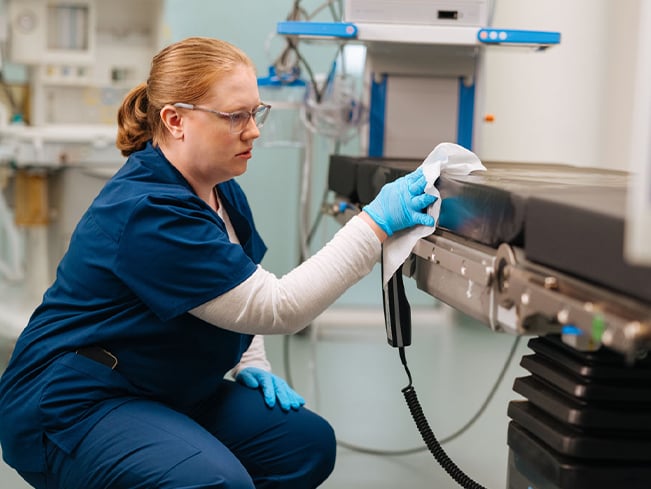
  • Healthcare environmental services professional disinfecting a patient treatment table in a clinical setting, highlighting infection prevention, hospital sanitation, patient safety, and healthcare facility cleanliness.

    Specialized expertise

    Proven operating practices and dedicated subject-matter experts.
  • Healthcare team members using a tablet in a hospital corridor, highlighting digital technology, workforce collaboration, operational efficiency, communication, and connected healthcare support services.

    Technology

    Better forecasting, labor optimization, and waste reduction.
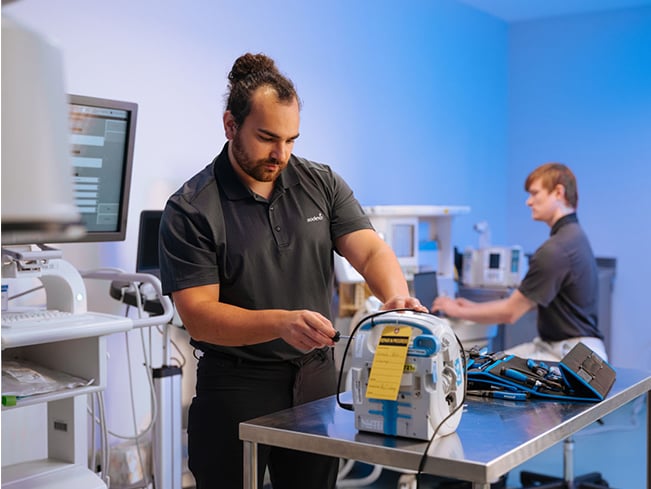
  • Healthcare technicians performing maintenance and testing on medical equipment in a clinical technology workspace, highlighting biomedical services, equipment reliability, standardization, and healthcare operations support.

    Standardization

    Consistent processes, reduced variation, and increased productivity.
  • Healthcare professional leading a training session for clinical staff in a conference room, presenting operational data and best practices to support workforce development, collaboration, and performance improvement.

    Workforce economics

    Access to broader benefits programs, more competitive fringe rates, slower benefit-cost growth, and reduced hiring and retention costs.

How volume discounts actually work

  • Dollar sign above concentric circles, representing financial value, investment, or revenue growth.

    Financial performance

    Lower costs, sustainable savings, stronger margins.
  • Icon of two people side by side, one with a folded arm gesture.

    Elevated patient experience

    Better food, better service, higher satisfaction.

  • Person icon with healthcare cross in a speech bubble and shield with checkmark, representing protected care.

    Improved health outcomes

    Nutrition that supports recovery and well-being.
  • Three person icons, with the center figure holding a document or badge, representing a team or group.

    Engaged and support teams

    Relieved operational burden, better training, stronger retention.
  • Person holding a serving tray with a covered dish, representing hospitality, food service, or customer support.

    Mission focus

    We handle food service, so you can focus on patient care.

What this looks like in practice

Across five core support services spanning 18 acute care campuses, 42 health centers, and 170 ambulatory sites, one long-standing partnership delivered $72M in savings, a 50% reduction in food waste, and 3x growth in medical nutrition therapy billing. It was built on open-book accounting, real audit rights, a defined subsidy cap, and transparent budgets with committed savings rather than unexpected escalators. Performance was tied to financial commitments the client could actually hold the partnership to.

See how partnerships grow

What a partnership can include

Value shows up differently depending on where you need it most. These are the four areas a partnership typically covers, and what each one unlocks in practice.

Healthcare food service worker carrying a covered meal tray through a clinical facility doorway, highlighting patient nutrition services, meal delivery, hospitality support, and coordinated healthcare operations.

Food & nutrition

This is where care, recovery, and economics come together. Clinical nutrition support helps identify and treat malnutrition, contributing to fewer readmissions and shorter stays. Nutrition coding and documentation ensures clinical revenue already earned is actually captured. Patient dining becomes part of the healing experience rather than something separate from it, while retail, cafés, and catering create new revenue streams and a destination people actually choose to use. And procurement, culinary planning, and menu engineering work together to lower food costs without cutting corners.

Healthcare environmental services worker mopping the floor in a clinical room, highlighting sanitation practices, infection prevention, facility cleanliness, and support for safe patient care environments.

Facilities & environment

This is the foundation of safe, reliable care. Environmental services support lower infection rates and measurable cost avoidance, while plant operations and maintenance keep facilities survey-ready with less downtime. Healthcare technology management helps equipment stay up and running and can defer capital expense, and energy and sustainability efforts lower utility cost while supporting broader sustainability goals. Capital access and deployment can help fund the modernization projects that have been sitting on the back burner.

Healthcare professionals walking together through a modern medical facility corridor, highlighting workforce collaboration, care coordination, employee engagement, and connected healthcare support services.

People & workforce

This is the stability that keeps care consistent when it matters most. Talent acquisition and hiring keep roles filled and staying filled, while retention and development support stronger retention and grow the next generation of leaders internally. Labor management maintains continuity through turnover, and rebadge and employee transfer processes reduce operational and financial strain on leadership. Engagement and culture work tie it all together, building a more consistent, higher-performing team.

Healthcare professional reviewing information with a patient at a hospital bedside, highlighting patient-centered care, clinical communication, care coordination, and personalized support in a healthcare setting.

Experience & hospitality

This is how patients and families feel your care. Service standards and training build a consistent, intentional hospitality culture, while patient and family experience efforts support higher satisfaction and loyalty. Added services create a more complete, cohesive on-site experience, and measurement and improvement give you visibility into what's working and where it's getting better. Digital and engagement technology makes the whole experience feel easier, faster, and more responsive.

Evaluating more than one partner?

This is the same set of questions we'd want you to ask any vendor, including us, before signing anything.
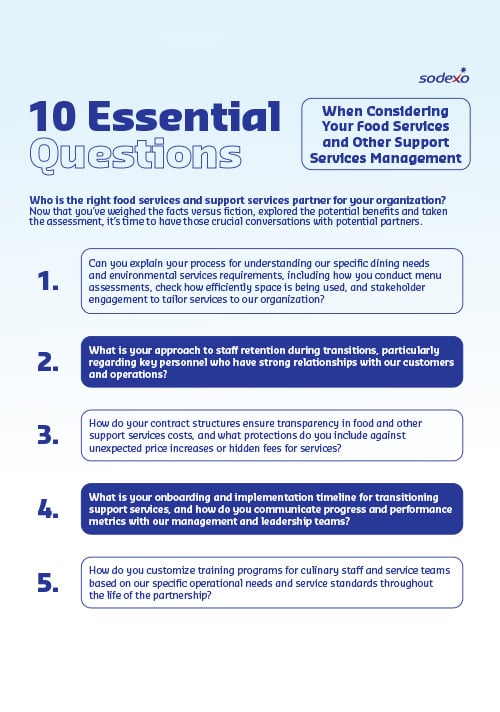
Infographic titled 10 Essential Questions outlining key considerations for selecting food services and support services management partners, featuring assessment, onboarding, staffing, and cost transparency topics.

What a partnership can include

  • Food & nutrition

    Where care, recovery and economics come together. From identifying and treating malnutrition to turning dining into part of the healing experience, this is where clinical outcomes and everyday hospitality meet.
    Patient receiving a meal tray from food service staff while resting in a hospital bed.
  • Facilities & environment

    The foundation of safe, reliable care. Lower infection rates, survey-ready facilities and equipment that works as it should, so your team spends less time reacting and more time confident in what's already in place.
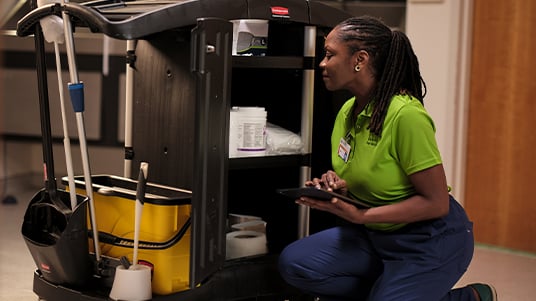
    Environmental services worker inspecting and restocking supplies on a cleaning cart in a healthcare facility, highlighting sanitation operations, infection prevention, and facility support services.
  • People & workforce

    The stability that keeps care consistent when it matters most. Roles get filled and stay filled, experienced staff stay and grow, and coverage doesn't drop when people leave.
    Healthcare team members gathered in a hospital corridor reviewing information on a tablet, highlighting clinical collaboration, care coordination, workforce engagement, and patient support services.
  • Experience & hospitality

    How patients and families feel your care. A consistent, intentional hospitality culture that shows up in higher satisfaction, more cohesive service, and confidence that carries beyond the visit itself.
    Healthcare support professional assisting a patient in a hospital room, highlighting personalized care, patient comfort, clinical support services, and a positive healthcare experience.

Loading component...

Loading component...

Loading component...

Loading component...

Loading component...

Loading component...

Explore first time outsourcing in healthcare

Choose the topic that fits where you are in your understanding and need for outsourcing food and support services

See what a partnership with Sodexo could look like