Hospital patient lying in a bed having a discussion with a nurse standing next to him

Whitepaper: The role of clinical nutrition in hospital care

Malnutrition often goes unnoticed in hospitals. It slows recovery and strains resources. Learn how embedding clinical nutrition into care delivery helps patients heal and hospitals perform.

Download now
  • of inpatients globally experience nutritional decline

  • $

    cost of each patient hospital re-admission due to malnutrition

  • longer stays for malnourished patients

    Loading component...

    Loading component...

    Loading component...

    Loading component...

    Download our latest white paper, Feeding Rapid Patient Recovery, to explore how hospitals can close the gap between clinical nutrition best practice and everyday care delivery, unlocking benefits for patients and clinical teams.

    How clinical nutrition improves patient outcomes 

    • Supports patient recovery

      Well-nourished patients are better equipped to recover from illness and medical interventions. Appropriate nutrition supports patient recovery through wound healing, tissue repair and infection prevention. 

      nterdisciplinary care team discussing nutrition and treatment planning with a patient at the bedside.
    • Financial impact of malnutrition

      Poor nutrition puts additional pressure on already constrained healthcare systems. Making clinical nutrition and malnutrition diagnosis part of routine care can therefore create both clinical and financial value for hospitals and health systems. 
      Healthcare team members collaborating during a nutrition and patient care planning meeting.
    • Integrating nutrition with care

      Hospitals can integrate clinical nutrition into patient care by treating nutrition as part of the care pathway rather than a standalone support service. Personalized nutrition for every patient can be reinforced throughout the patient experience by dietitians, clinicians and culinary teams alike.  
      Healthcare professional delivering a meal tray to a patient in a hospital room.
    • Detecting malnutrition with AI

      AI for malnutrition detection analyzes patient data and identify patterns that may indicate nutritional risk. Used alongside clinical expertise, AI in clinical nutrition can identifying patients whose malnutrition might otherwise go unrecognized, supporting earlier assessment and intervention.
      Healthcare team members collaborating during a nutrition and patient care planning meeting.

    Making nutrition part of the patient care plan

    Backed by global and US specific research and industry experts, this white paper explores how putting nutrition at the heart of healthcare delivery creates better outcomes for patients, clinical teams and hospitals.  

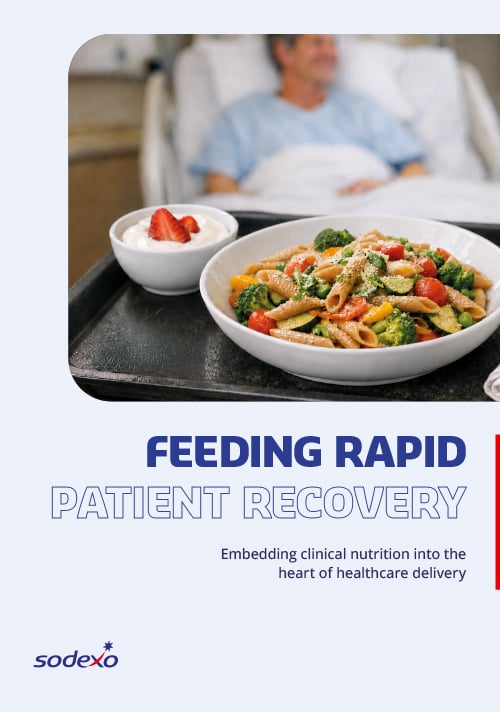
    Cover image for the Feeding Rapid Patient Recovery white paper
    • line art icon representing a hand taking notes on paper

      Integrate clinical nutrition

      Manage malnutrition risk and treatment with the same rigor as other established clinical priorities.

    • line art icon representing a magnifying glass hovering over a data chart

      Track nutrition journeys

      From timely admission screening and accurate coding through ongoing monitoring, discharge and, where appropriate, follow-up.

    • line art icon representing targeting your personal preferences

      Personalize nutrition therapy

      Combine clinical requirements with choice, appropriate recipes, taste and presentation.

    • line art icon representing a team of dietitians, clinicians and culinary teams

      Connect care teams

      Bring dietitians, clinicians and culinary teams together so nutrition is reinforced throughout the patient experience. 

    Frequently Asked Questions


    Make clinical nutrition a strategic hospital priority 


    By connecting clinical nutrition with care delivery at every stage, hospitals have an opportunity to accelerate recovery, improve patient experience, strengthen clinical outcomes and generate meaningful financial value.


    As healthcare systems confront growing demand with limited resources, embedding nutrition at the heart of care offers a practical route towards more coordinated, patient-centered and sustainable healthcare. 

    Read our latest stories