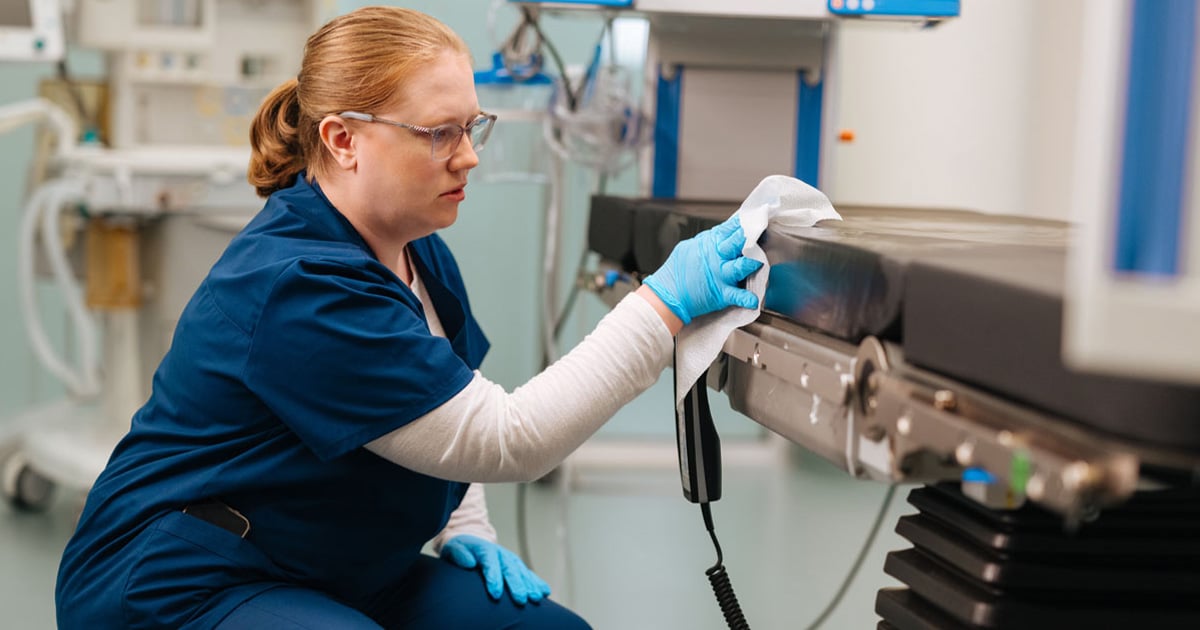
Environmental services worker cleaning and disinfecting a hospital bed with a cloth, highlighting healthcare sanitation, infection prevention, patient safety, and facility hygiene practices.

What healthcare environmental services really mean for patient experience and safety

Healthcare leaders often treat cleanliness scores as a signal of infection prevention performance. Two new Sodexo Healthcare white papers tested that assumption against the data. We found that the role that Environmental Services (EVS) plays in healthcare is more nuanced than expected. 

Does perceived cleanliness reflect infection prevention performance?

Not consistently. We examined the relationship between patient cleanliness scores and actual infection rates and found no reliable connection between the two. That challenges a common assumption, that higher cleanliness scores signal stronger infection prevention. Cleanliness still shapes how patients judge their care, but it may not tell you what you think it does about safety. An effective hospital cleaning service must therefore address both infection prevention and the broader patient experience. What patients respond to is broader than a clean room. They notice people, communication, consistency and the confidence those create across their entire care journey.

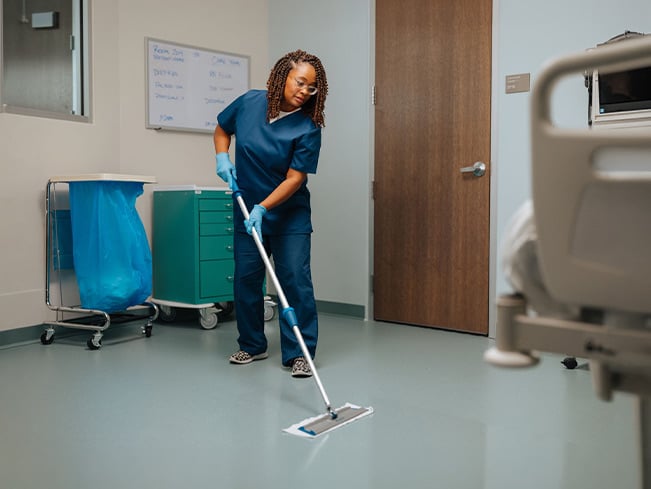
    Healthcare environmental services staff member mopping the floor in a patient room, highlighting hospital cleanliness, infection prevention, sanitation protocols, and safe care environments.

    Where perception meets prevention

    HCAHPS cleanliness measures how often patients say their room and bathroom were kept clean. It reflects the visibility of cleaning, not its microbiological effectiveness. This analysis of cleanliness scores against hospital-acquired infection outcomes found no strong link between the two. Bottom line: treat cleanliness scores as one signal among many, not a stand-alone measure of environmental safety.

    Healthcare staff making a hospital bed in a patient room, with medical equipment and bedside fixtures visible, highlighting cleanliness, room preparation, patient safety, and healthcare support services.

    The deeper influence of cleanliness on patients

    EVS professionals often spend more uninterrupted time with patients than clinical staff do. That makes them part of the care team, not a service running behind the scenes. This paper examines how trust, communication and consistency shape the way patients judge their care. It also shows how increased EVS rounding and patient engagement are associated with improved HCAHPS cleanliness scores.

Loading component...

Loading component...