Case study: Expanding Breakfast Access to Improve Student Readiness and Participation
This case study highlights how three districts, Providence Public Schools, Bensenville School District 2, and Collinsville CUSD #10 implemented innovative “Grab-and-Go” and mobile breakfast strategies to ensure students start their day nourished and ready to learn.
The impact of breakfast on learning
Loading component...
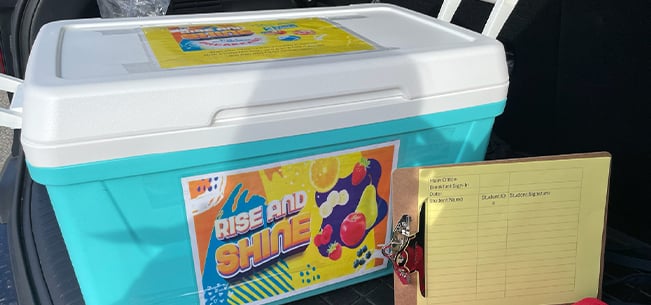
To address these barriers, PPSD launched a Grab-and-Go Breakfast pilot at eight schools. Breakfast carts and mobile stations were positioned directly at school entry points, allowing students to pick up a reimbursable meal immediately upon arrival.
The results
The Grab-and-Go model proved both practical and cost-effective. By leveraging existing staff and investing in minimal equipment, PPSD significantly increased access and convenience for secondary students. In just the first three months, the district recorded a 62% average increase in breakfast participation, demonstrating a strong demand for accessible, flexible morning service. Based on its early success, the district is evaluating opportunities for expansion.

The initiative
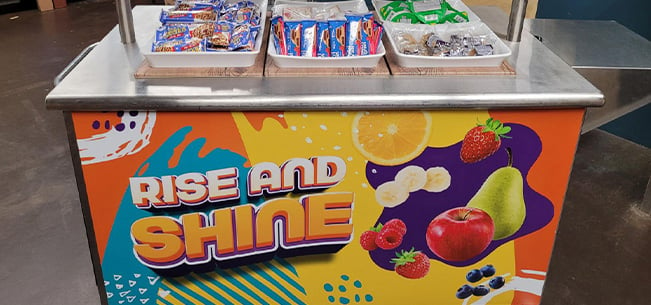
The district repositioned its breakfast cart directly outside the band room. Students exiting rehearsal could immediately pick up breakfast, after which the cart was moved to the main entrance to serve students arriving late or those who missed earlier opportunities. Staff prepared pre-made bags containing a breakfast option and juice, with students selecting an additional item to complete a reimbursable meal. Hot and cold options ensured variety and appeal.
The results
This simple shift, bringing breakfast to students instead of expecting students to find breakfast, led to a 56% increase in participation. By prioritizing convenience and visibility, Bensenville effectively removed a major barrier to access.

The initiative
The district introduced two key strategies:
- • Breakfast Carts, placed in high-traffic areas during arrival
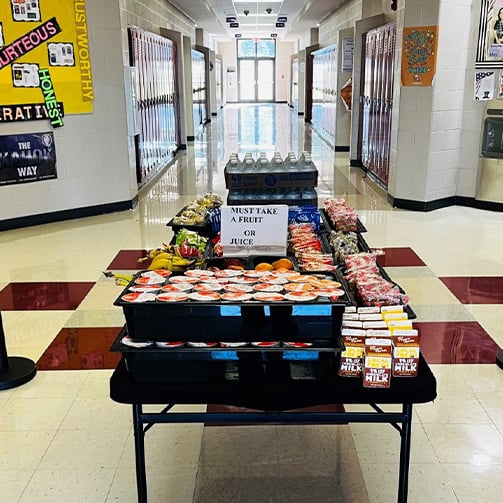
- • Second Chance Breakfast, offered later in the morning to align with older students’ routines and hunger patterns
Both strategies emphasized convenience, visibility, and student choice. Support from district administrators, principals, staff, and the Sodexo team helped build excitement and trust around the initiative.

The results
The impact was substantial:
- • 150 additional breakfasts served daily via mobile carts
- • 1,100 additional breakfasts served through Second Chance tables
- • Altogether, these changes translated to an over 800% increase in breakfast participation across middle and high schools
The overwhelmingly positive feedback from students and staff underscores the program’s sustainability and long-term value.

Conclusion
Across all three districts, the data tells a consistent story: when schools make breakfast accessible, visible, and convenient, participation rises, and so does student readiness for the day ahead.
Whether through Grab-and-Go service, strategically placed breakfast carts, or Second Chance offerings, these districts demonstrate that targeted, student-centered approaches can dramatically strengthen school nutrition programs.
Their success illustrates a scalable model for other districts looking to improve equitable access to breakfast and support student wellbeing.

Get started with Sodexo
Contact our team
Loading component...
Explore our solutions