377
nutrition and agriculture lessons delivered
47
taste tests conducted
18
field trips conducted
35+
active community partnerships supporting program activities
The starting point: Building a school garden program through partnership
What began nearly a decade ago with a single school garden has evolved into a districtwide initiative anchored by meaningful relationships.
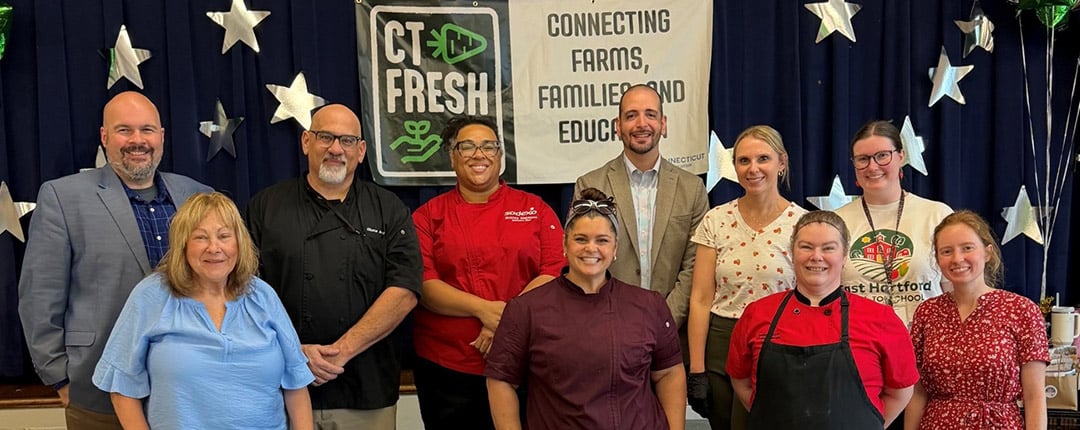
East Hartford Public Schools has built one of the most comprehensive and successful Farm to School programs in Connecticut. Through strategic partnerships, innovative programming and sustained commitment to local sourcing, the district has created a model that extends well beyond the cafeteria, connecting students to their food, their community and the agricultural systems that sustain both.
Field trips to local farms
Students see sustainable growing practices firsthand, meet the farmers who grow their food, and participate in lessons tied to plant biology, environmental science, and nutrition.
Classroom activities
Experiences are reinforced before and after each visit, creating a cohesive educational arc.
Living classrooms
From early childhood centers to elementary schools, students plant, tend and harvest crops while learning about the food system.
Summer programming
Arts, crafts, and harvest celebrations extend this engagement, ensuring the learning continues year-round.




The results: A farm-to-school success story
The Connecticut Grown for Connecticut Kids Grant provided critical funding to expand local sourcing and strengthen connections between schools and farms. The USDA Healthy Meal Incentives Award recognized the district's success in integrating healthy, locally sourced ingredients into school meals and increasing student participation.
Recent highlights include Strawberry Day, an interactive event featuring locally sourced strawberries that students overwhelmingly rated as "loved it." This kind of engagement reflects both the quality of the experience and the strength of the program's execution.
Looking ahead: A model for any K-12 school nutrition program
Beyond formal grants, the district has developed creative funding strategies. The Annual Garden Bucket fundraiser, managed through the Hunger Action Team, generates flexible resources that support immediate needs like garden maintenance and educational materials. This community-driven funding model ensures the program remains responsive and sustainable.
East Hartford's Farm to School program demonstrates what is possible when strong execution, creativity and partnership come together. The district has built a model that enhances student nutrition, supports local agriculture, strengthens community ties and creates lasting educational value. It is a program that extends well beyond the cafeteria and into the fabric of the community itself.
Every program starts somewhere small.
Nearly a decade after planting a single school garden, East Hartford runs one of the most comprehensive farm to school programs in Connecticut. Their success shows that the model you want to build can start with the ground you already have.