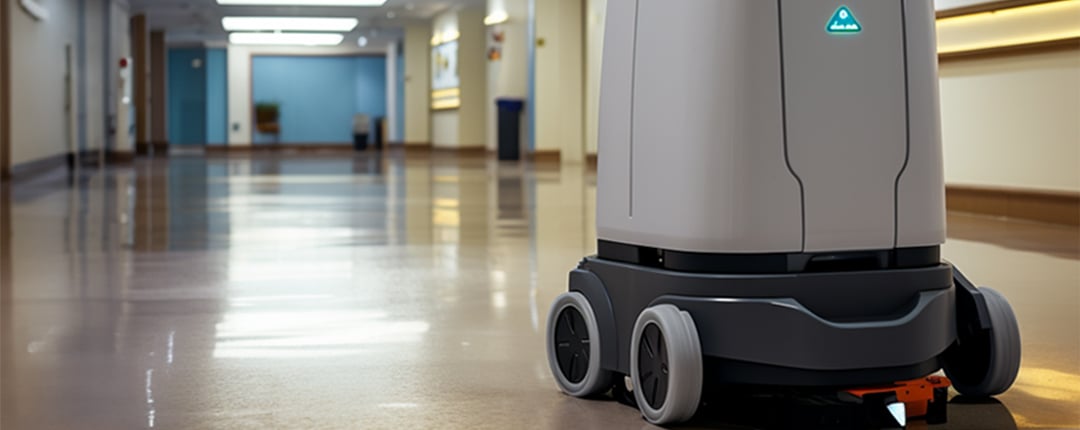
Autonomous floor-cleaning robot operating in a bright hospital corridor with polished reflective floors.

Using Robotic Devices to Supplement Hospital Environmental Services


The integration of robotic devices is growing in healthcare. A in-depth analysis of your site’s risks, opportunities, and challenges can determine the suitability of such devices for your needs.

Autonomous cleaning machines

The integration of autonomous cleaning machines is gaining significant traction in healthcare environments, particularly as staffing healthcare cleaning services teams has become more challenging. With careful consideration and planning, robots (or more accurately, cobots) can complement the efforts of human workers, taking on redundant tasks to free up staff for more high-value or patient-focused activities.
 
Before taking the leap into the realm of robotic cleaning, consider these three things to determine if autonomous cleaning machines are the best option for your hospital. 

Discover how robotic devices can support your site.

Reach out
Bright hospital corridor with patient beds, seating, blue doors, and a window at the far end.

Suitable environments

Robotic healthcare cleaning services often work best in large, unoccupied areas where they can operate safely, effectively and efficiently with minimal supervision—making long, wide-open corridors  ideal. Areas with increased human traffic, tight corners and odd angles pose greater risks and challenges. For instance, in occupied spaces autoscrubbers require close monitoring to avoid obstacles and mitigate slip and fall hazards. When selecting autonomous vacuums, an areas’ target noise levels should also be carefully considered. 


Once appropriate areas for use are selected, many robotic devices can be precisely programmed to ensure no areas are missed.

Healthcare worker using a computer workstation at a hospital nurses’ station.

Risks

When planning for the introduction of autonomous cleaning machines, it’s important to consider the complexity of the environment, the presence of delicate equipment, and the need for human oversight in certain situations. 

To avoid losing valuable time supervising robotic equipment, plans should be made for team members tasked with oversight of robotic devices to recapture labor time by performing other tasks within their scope of work. 

For robots that function more independently, significant time savings can be gained by putting these devices  to work in low-risk, unoccupied areas during slower times or overnight.
Healthcare professional writing on a glass board during a collaborative planning discussion.

Return on investment

It is important to perform a cost-benefit analysis to ensure your robotic equipment achieves your desired savings. To calculate how many hours of labor savings are needed to offset the cost of the device, use this equation: 


Total cost of device over 3 years
___________________________________     
Average loaded hourly rate (hourly rate + benefits) = 

Hours required to be saved to be cost neutral 


When calculating the total expenditure, be sure to take into account maintenance costs, accessories such as scrubber heads, and any required products or chemicals. Downtime for recharging and maintenance can impact the number of machines you may need. Consider this when calculating the total cost of your devices.

Find an expert to help

Consulting with experts can prevent costly mistakes and get the value you want from investing in autonomous devices. As experts in the latest environmental services innovations, Sodexo Healthcare services can help you determine if robotic healthcare cleaning services will work for your needs and provide guidance on selecting the right device for you.
Loading component...

Loading component...